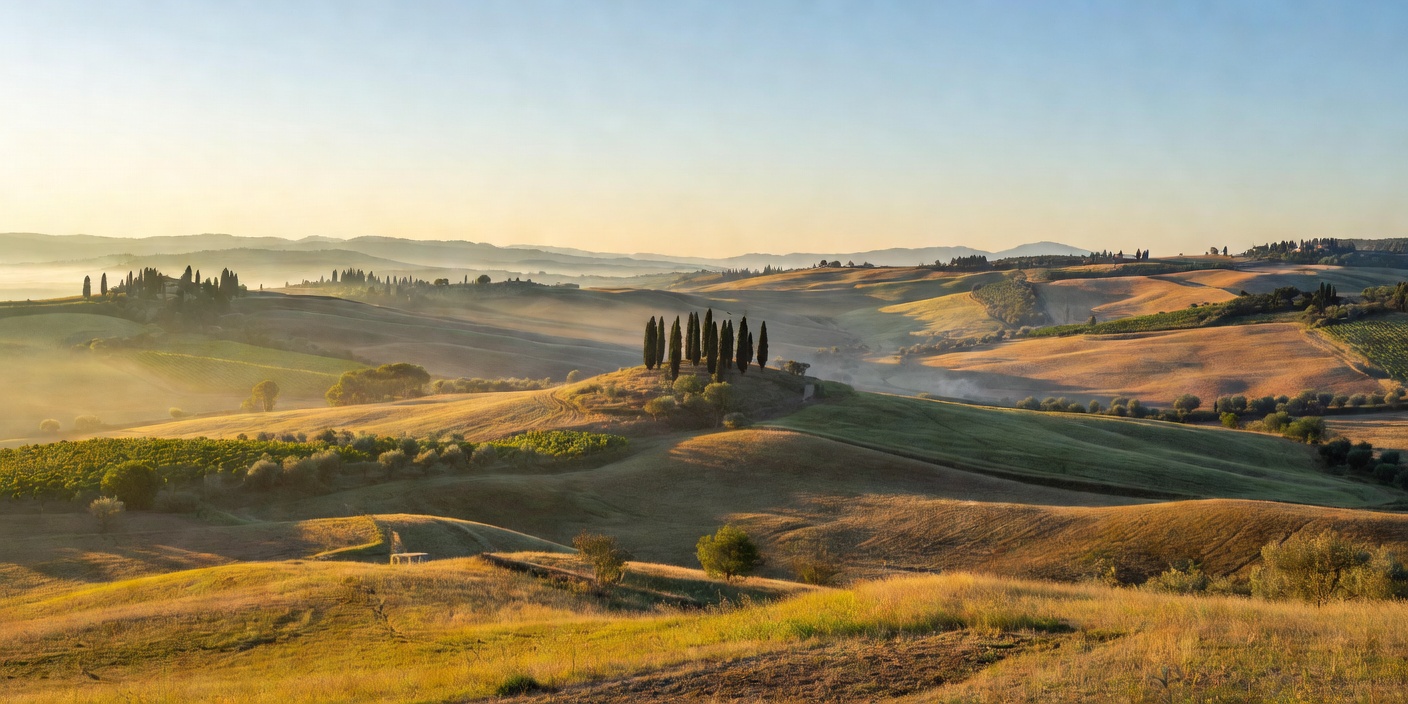
The Shift from Sightseeing to Inhabiting
Most travelers touch Val d’Orcia as a rapid postcard: a thirty-minute pause at the iconic Belvedere cypress copse, a rushed Pecorino cheese tasting in Pienza, and an evening drive back to Florence. They see the landscape as an image rather than an ecosystem.
When you commit to 21 consecutive days in a restored stone podere along the Strada dei Calanchi, the postcard dissolves. You begin to notice the nuances of morning clay vapor, the exact hour the shepherd brings the ewes across the ridge, and the rhythm of the Tuesday morning market where the artichoke vendor knows you by name.
"To stay three weeks in one valley is not fifteen extra days of tourism; it is the total transition from voyeurism to belonging."
Daily Rhythms of the Podere
The daily cadence at Podere Bella Vista follows the agricultural calendar rather than a digital clock:
- 06:45: First light over Monte Amiata. Walking the dirt white road (strada bianca) to San Quirico for espresso and schiacciata toscana.
- 09:30: Uninterrupted desk hours in the north-facing library with windows framing the clay badlands.
- 13:00: Simple communal lunch of pici pasta hand-rolled with local stoneground flour, garlic, and wild herbs.
- 16:00: Soaking in the natural thermal limestone waters of Bagno Vignoni or Bagni San Filippo.
- 19:30: Stoking the wood oven for evening sourdough loaves as twilight bathes the hills in terracotta red.
The Footpath: Walking the Via Francigena
The ancient Canterbury-to-Rome pilgrim highway runs right past the garden gate. Walking the 14 kilometers between San Quirico d’Orcia and Castiglione d'Orcia at 4 km/h exposes Romanesque chapels, oak canopies, and dry-stone fountains that are completely invisible from asphalt roads.
Verified Practical Resources
For independent slow travelers planning a residency, we recommend consulting regional agro-tourism cooperatives and official cultural trail registries: